Ano ang pagkakaiba ng online, modular at hybrid systems?
May apat na sistema na sinusunod ng mga education institution sa pag-deliver ng kanilang lesson at pakikipag-transaction sa kanilang mga kliente at estudyante.
1) Face to face o inperson (F2F or IP) – Pupunta ang estudyante sa school at doon mismo mag-aral kasabay ng iba pang mga estudyante. Ito ay tinatawag na SYNCHRONOUS LEARNING.
2) Online – Hindi pupunta sa school ang estudyante ngunit mag-aaral din ito kasabay ng iba sa pamamagitan ng mga online learning tools tulad ng Zoom, Google Meet at Clasroom, Messenger at iba pang virtual conference tools. Synchronous learning din ito.
3) Modular – Hindi pupunta sa school o sa online ang estudyante kundi matatanggap niya ang mga lesson niya sa door to door delivery, email o sa school portal at gagawin niya sa sariling schedule ang pag-aaral saka niya i-submit ang mga assignment niya sa pareho ding paraan ng pag-deliver sa kanya. Ito ay tinatawag na ASYNCHRONOUS LEARNING.
4) Hybrid – Ito ay anumang combination ng number 1, 2 at 3. Mayroong hybrid online-modular (HOM) at hybrid inperson-modular (HIM) o hybrid face-to-face and modular.
SYNCHRONOUS LEARNING – Sabay-sabay na mag-aral ang mga estudyante sa loob ng classroom o iba pang bahagi ng school campus, o sa pamamagitan ng mga virtual conference tools tulad ng Zoom, Google Meet, at Messenger.
ASYNCHRONOUS LEARNING – Hindi sabay-sabay ang pag-aaral at tatapusin ng estudyante ang mga assignment niya sa module na ipapadala sa kanya, sa pag log-in sa school portal o LMS, o sa Google Classroom ng school.
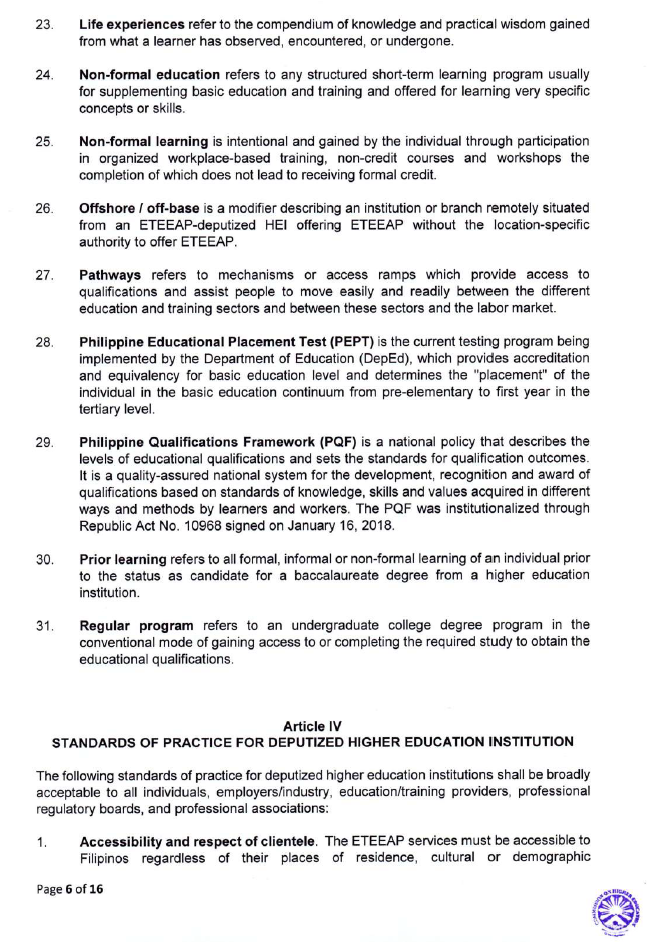
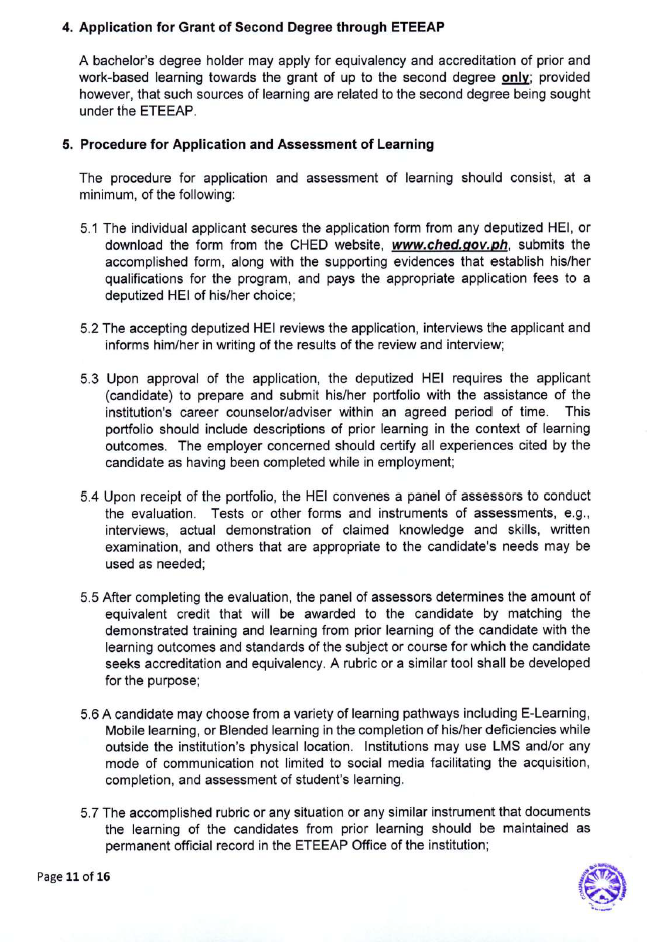
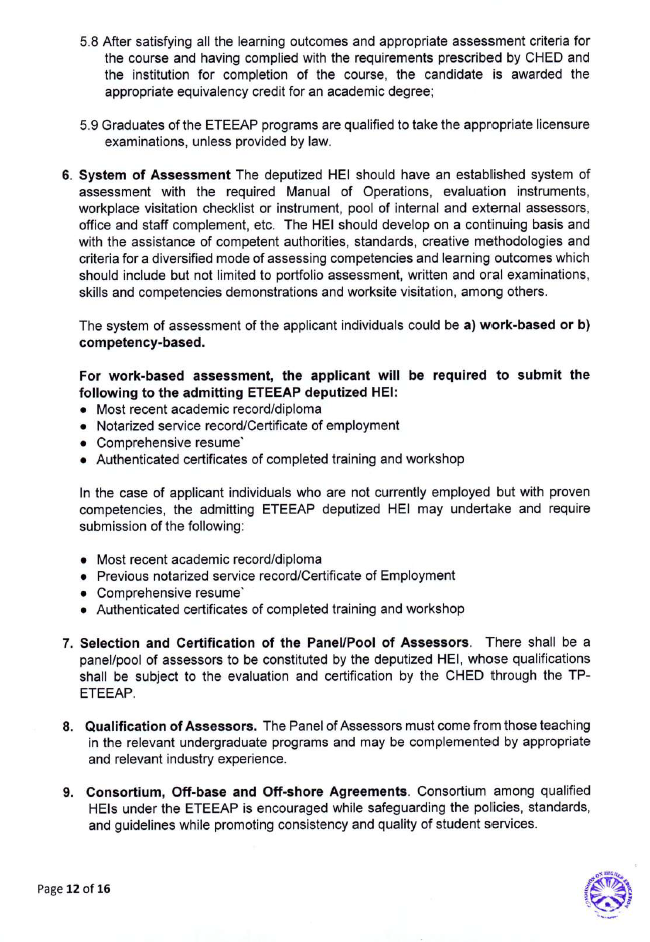
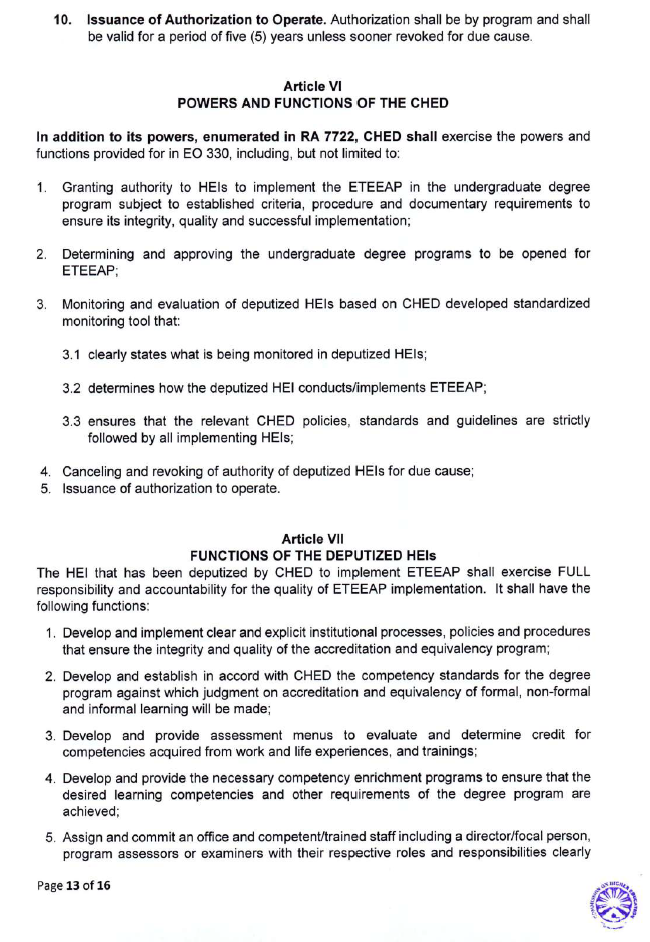
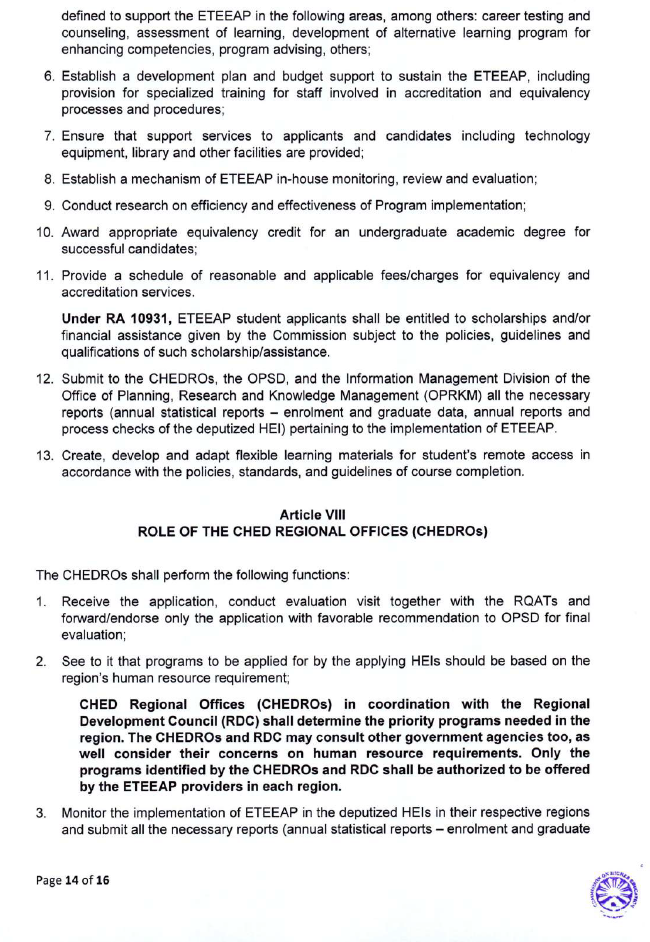
Binigyan ng instruction ng CHED ang mga ETEEAP school na gamitin ang ibat-ibang sistemang ito sa kanilang CMO#29-S2021 (pwedeng tingnan sa link na ito) para matulungan ang mga nagtatrabahong gustong mag-aral kahit nasa abroad sila at nasa ibat-ibang time zones.
Narito ang isang video na nagpapaliwanag sa mga impormasyong ito.
Thank you for visiting our site and we hope the information you found are useful to you. If you have other questions on topics that were not covered by our articles, you may send them through the comment section below and we will address them.
We also answer questions of our Facebook Group members here. You can send your questions on the comments section below.
Is it possible na mag-submit ng docs for assessment to different schools para may back up? – The answer is yes. Additional advise is to compile all your documents in the proper order as described on this link. An then save them into a properly labeled folder and zip the folder before sending to the schools.
If magsusubmit ba ko ng requirements, need ba physical na pupunta sa school or can I send it via email/online? – Depende yan sa school. Karamihang schools ay ipapadala sa email ang mga document. (Additional advise is to compile all your documents in the proper order as described on this link. An then save them into a properly labeled folder and zip the folder before sending to the schools.)
If physical kong isusubmit requirements, kelangan ba original lahat? Kasi if yes, di na ko makakapagtry sa ibang school. Okay sana kung pwede photocopies lang. – Hindi dapat hingin ng mga school ang mga original document. Ipapakita lang yan kapag face-to-face (o sa virual) na interview na. Hindi sasagutin ng school ang document ninyong nawala sa poder nila. At kahit pananagutan pa nila yan, napakahirap kumuha uli ng kapalit.
I have one COE lang which is from my current employer and I’ve been with them for 6 years. Is that okay po? – Yes. As long 5 years or more work experience, it is enough. Mas may advantage kung may iba pa dahil may additional points every additional year ng work experiences. Ang mga training, seminar at iba pang learning certificates ay nabibigyan din ng points sa evaluation para makompleto yung 50 or 60 points requirement na matangap sa ETEEAP.
Yung mga nag-ooffer po ng assistance for enrollment and nanghihingi ng payment agad, legit po ba sila? – Walang initial payment na hinihingi ang mga school kapag nag-submit ng application for evaluation. Kapag approved na ay saka sila magpapadala ng evaluation form at nandoon na rin ang mga babayaran ng aplikante.
Face to face o inperson (F2F or IP) learning – Pupunta ang estudyante sa school at doon mismo mag-aral kasabay ng iba pang mga estudyante. Ito ay tinatawag na SYNCHRONOUS LEARNING.
Online Learning – Hindi pupunta sa school ang estudyante ngunit mag-aaral din ito kasabay ng iba sa pamamagitan ng mga online learning tools tulad ng Zoom, Google Meet at Clasroom, Messenger at iba pang virtual conference tools. Synchronous learning din ito.
Modular Learning – Hindi pupunta sa school o sa online ang estudyante kundi matatanggap niya ang mga lesson niya sa door to door delivery, email o sa school portal at gagawin niya sa sariling schedule ang pag-aaral saka niya i-submit ang mga assignment niya sa pareho ding paraan ng pag-deliver sa kanya. Ito ay tinatawag na ASYNCHRONOUS LEARNING.
Hybrid Learning – Ito ay anumang combination ng number F2F learning, online learning, at modular learning. Mayroong hybrid online-modular (HOM) at hybrid inperson-modular (HIM) o hybrid face-to-face and modular.
SYNCHRONOUS LEARNING – Sabay-sabay na mag-aral ang mga estudyante sa loob ng classroom o iba pang bahagi ng school campus, o sa pamamagitan ng mga virtual conference tools tulad ng Zoom, Google Meet, at Messenger.
ASYNCHRONOUS LEARNING – Hindi sabay-sabay ang pag-aaral at tatapusin ng estudyante ang mga assignment niya sa module na ipapadala sa kanya, sa pag log-in sa school portal o LMS, o sa Google Classroom ng school.
Your may send your questions in the comment section below. Our answers could be from the information coming from the other parts or sections of this site, or we can inquire from reliable sources for accurate answers.
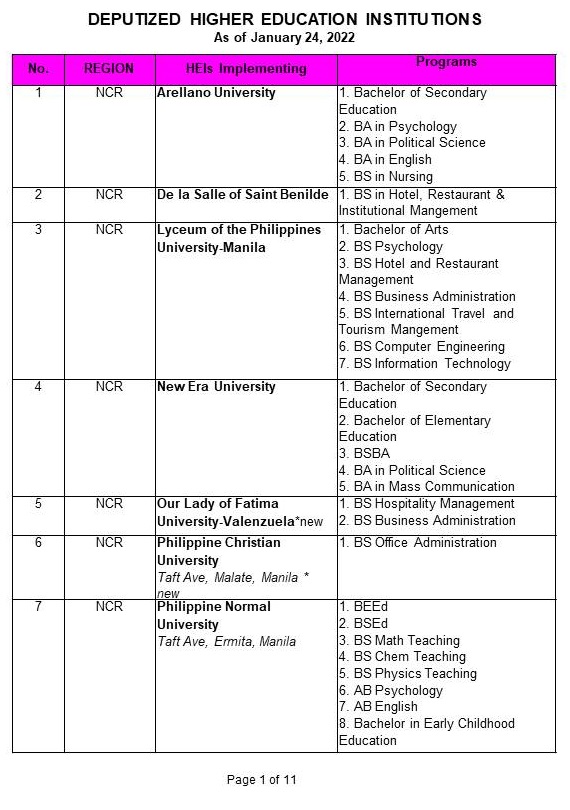
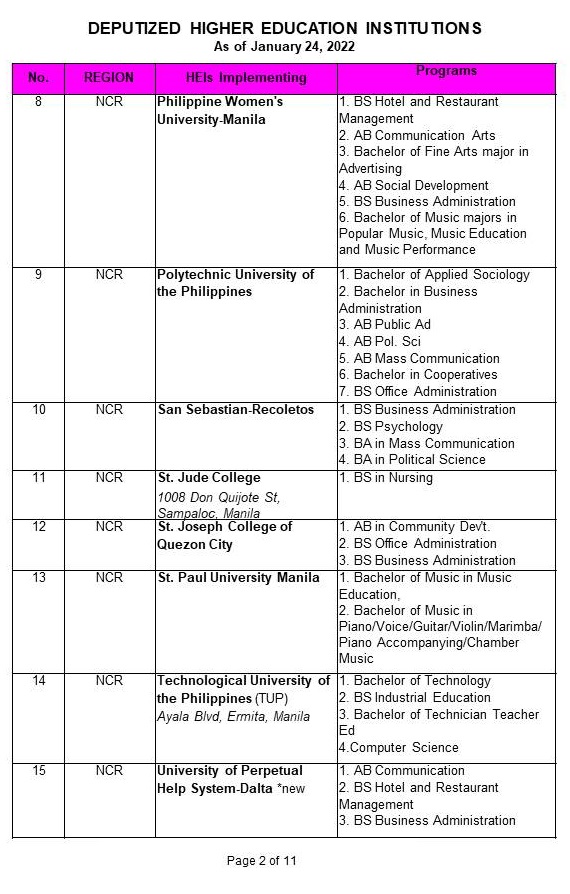
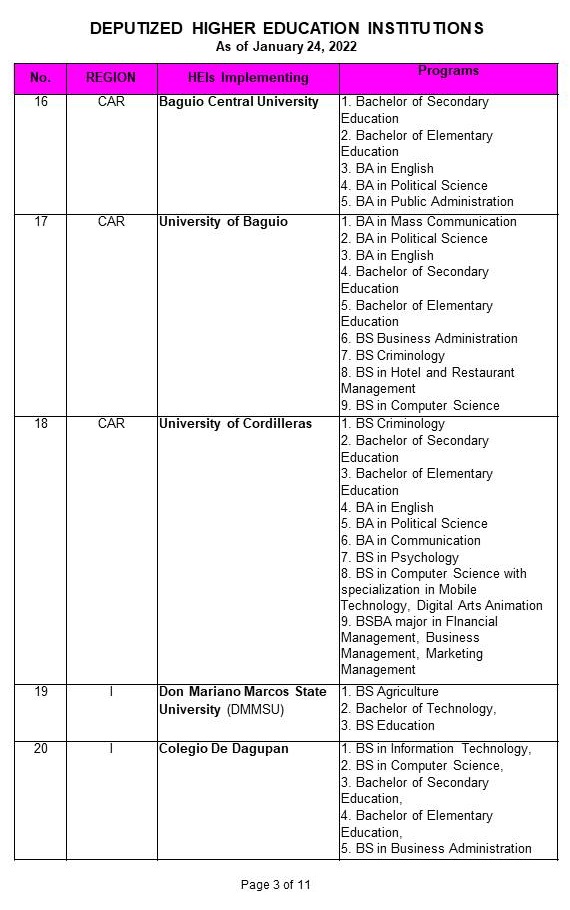
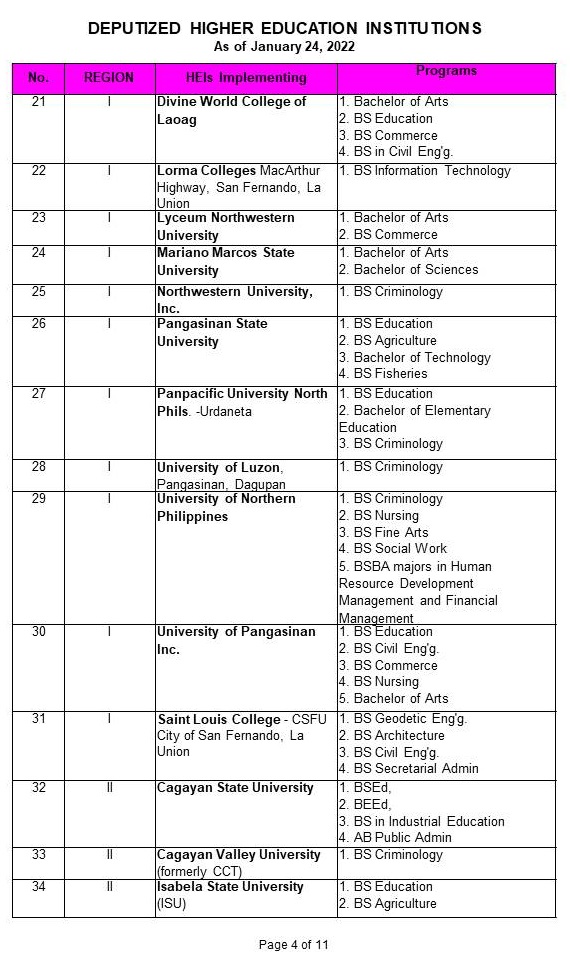
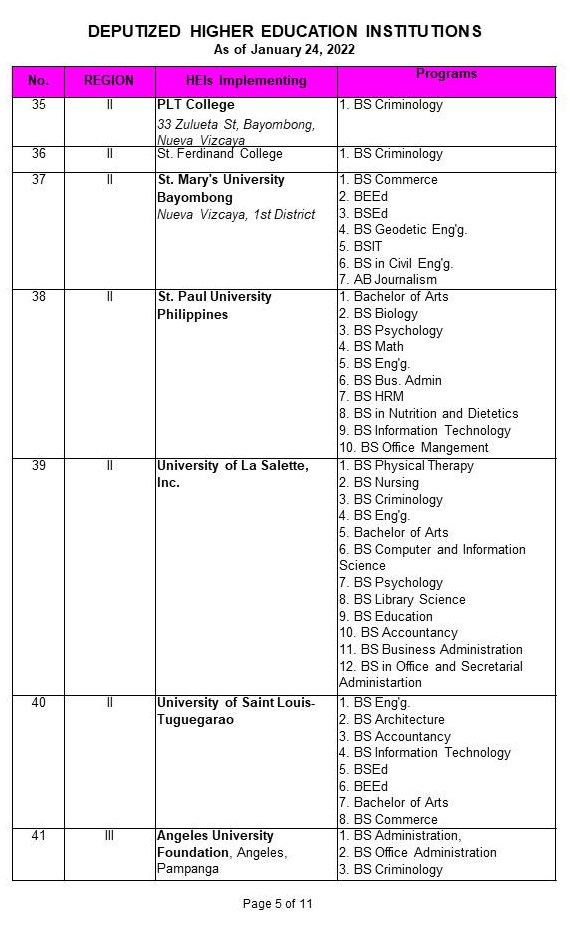
This is the updated list of colleges and universities that were deputized by the Commission on Higher Education (CHEd) to offer some of their programs through the ETEEAP as of January 24, 2022.
Update: A January 2023 updated list was requested from CHED on this link and can be downloaded from there.
Below are four universities in the above list that were featured on this website along with the relevant information you need. You may tap/click on the links to visit their pages.
Please take note on this update of this CMO: This has been superseded by the new ETEEAP Implementing Rules and Regulations of 2025 (ETEEAP-IRR 2025) in accordance to the RA 12124 of March 3, 2025. Here is the link to the said IRR and RA12124. http://eteeap.com/cmo11s2025
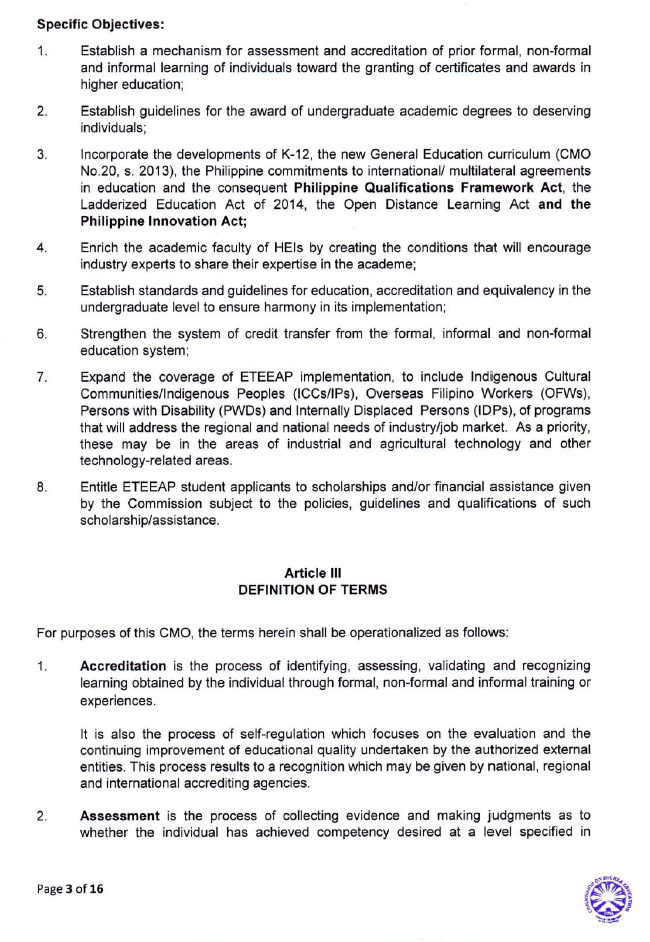
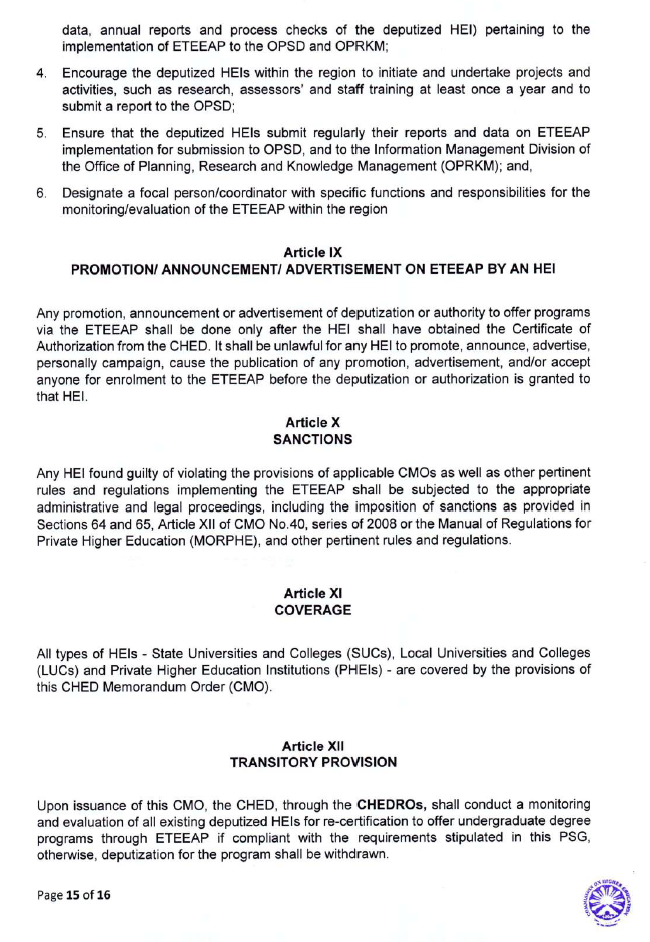
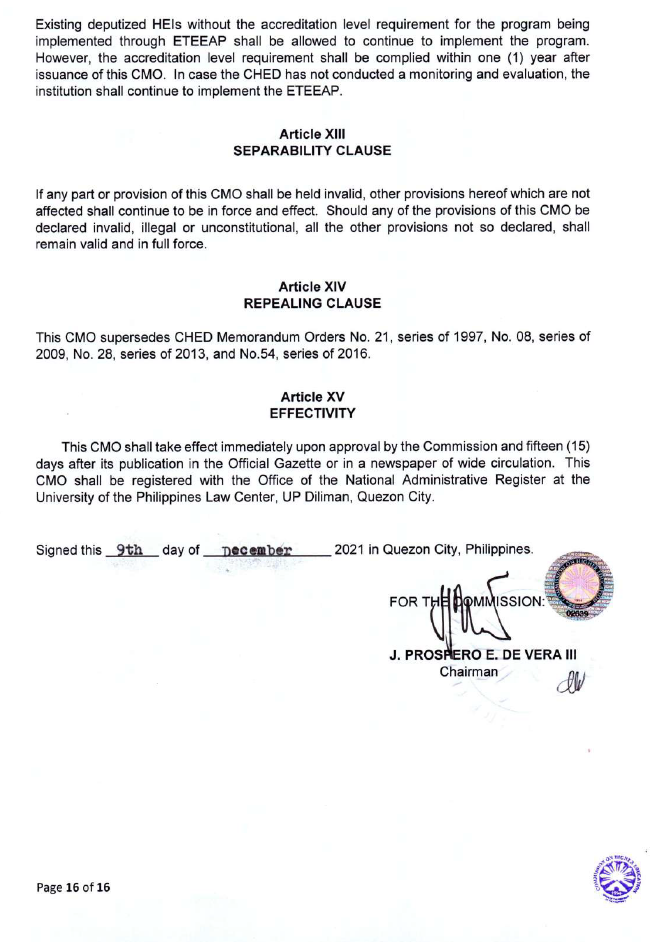
The Commission on Higher Education (CHEd) has an updated information about ETEEAP. It’s called CHED Memorandum Order Number 29, Series of 2021.
One of the important information is how many programs are allowed for one to enroll? If an applicant has already completed a degree under the regular program, is he still allowed to enroll on another under the ETEEAP?
You can also click/tap on the link below to see the content of the said CMO:
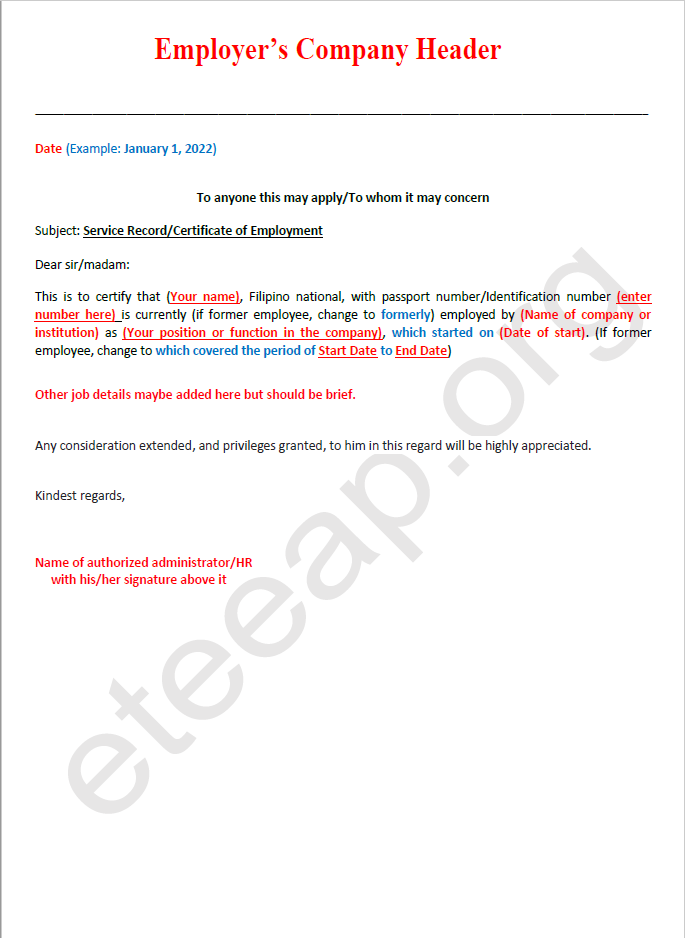
For those who need to prepare their COE for their ETEEAP application, here is a sample prepared for you. You may download the PDF version of the images, and there is also a MS Word version that can be edited. You can find the download links below the images.
Please help yourself.
Important: The ones in red should be edited according to the information about you. The ones in blue are samples and should be edited with information that match your circumstances and experiences.
You may download the PDF version of the sample CV here.
DMMMSU is a state university located in the beautiful coastal province of La Union in Northern Philippines. As you travel northward, the South China Sea beaches, which is part of the Lingayen Gulf, is accessible just a few minutes on your left. In some areas you can see the beautiful sceneries of the sea right inside your car.
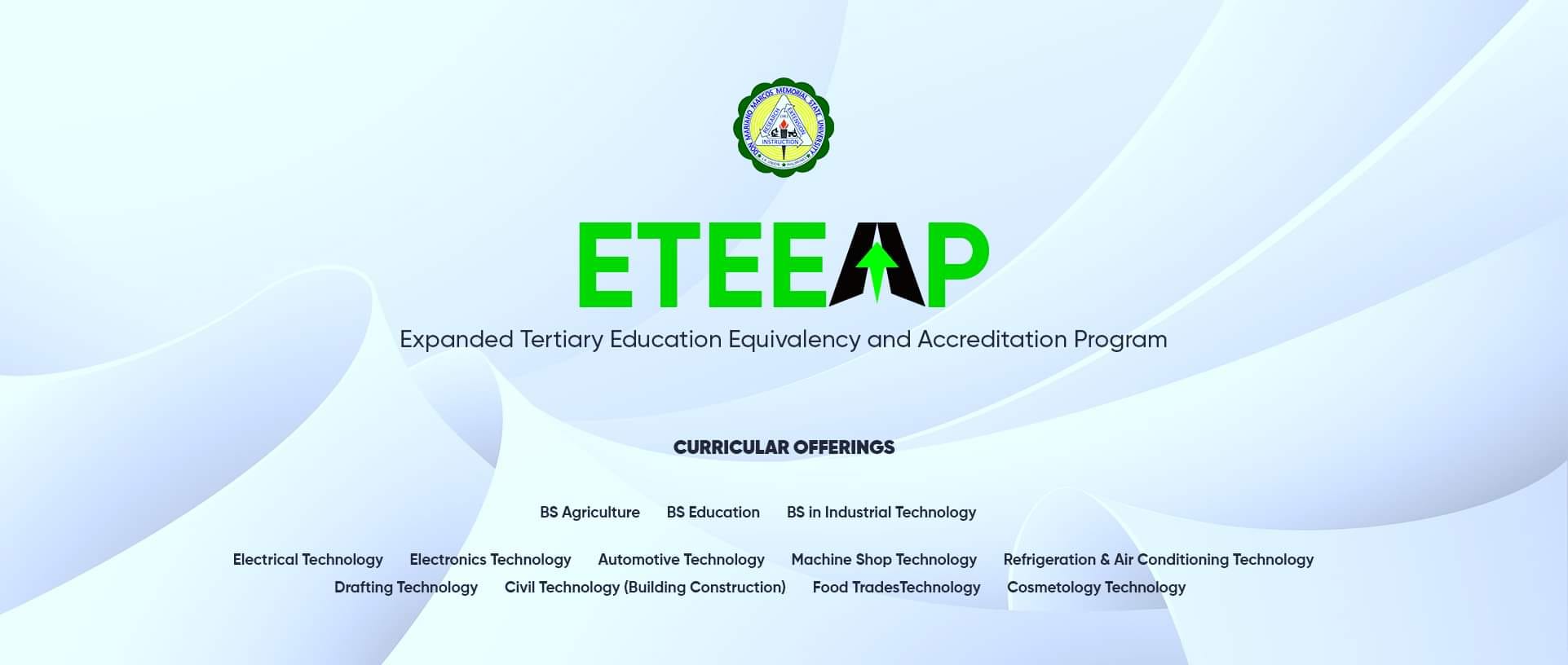
Don Mariano Marcos Memorial State University (DMMMSU), or DMMMSU to the locals, is one of the state universities in the Philippines, and it is also one of the deputized higher education institutions of the Philippine’s Commission on Higher Education (CHEd) to deliver the some of their programs through the Expanded Tertiary Education Accreditation Program (ETEEAP). They have three strategically located campuses. For more information about the university, you may visit their official website here. As for their ETEEAP, please read on as we have exciting features of their system that you will be delighted to know.
They have no dedicated page for their ETEEAP on their website, but with their permission, we are providing our visitors here a complete information.
Bachelor of Secondary Education Offered Majors: – Filipino – English – Science – Social Studies – Mathematics
Bachelor of Technical-Vocational Teacher Education Offered Majors: – Automotive Technology – Beauty Care and Wellness – Drafting Technology – Electrical Technology – Electronics Technology – Food and Service Management – Garments, Fashion and Design
Bachelor of Technology and Livelihood Education Offered Majors: – Home Economics – Industrial Arts – Information and Communication Technology
II – Bachelor of Science in Industrial Technology (BSIT)
Offered Majors:
Electrical Technology
Electronics Technology
Automotive Technology
Machine Shop Technology
Refrigeration & Air Conditioning Technology
Drafting Technology
Food Trades
Cosmetology
III – Bachelor of Science in Agriculture (BSA)
Offered Majors:
Animal Science
Soils
Plant Protection (Plant Pathology)
Crop Science (Horticulture, Agronomy)
Basic Qualification of the Candidate
Candidates must posses a high school diploma of the PEPT placement equivalent to first year College.
Candidates must have been employed for at least five (5) years in the industry related to the area of specialization being applied for in the program.
Candidates must be at least 23 years old. They must present a birth certificate to support the claim.
Candidates must be proficient in the area of specialization being applied for.
Ability of a candidate to submit an accomplished ETEEAP Application Form. The ETEEAP application form is a package of information intended for the DMMMSU faculty and staff to determine whether the applicants is eligible or not for the the program.
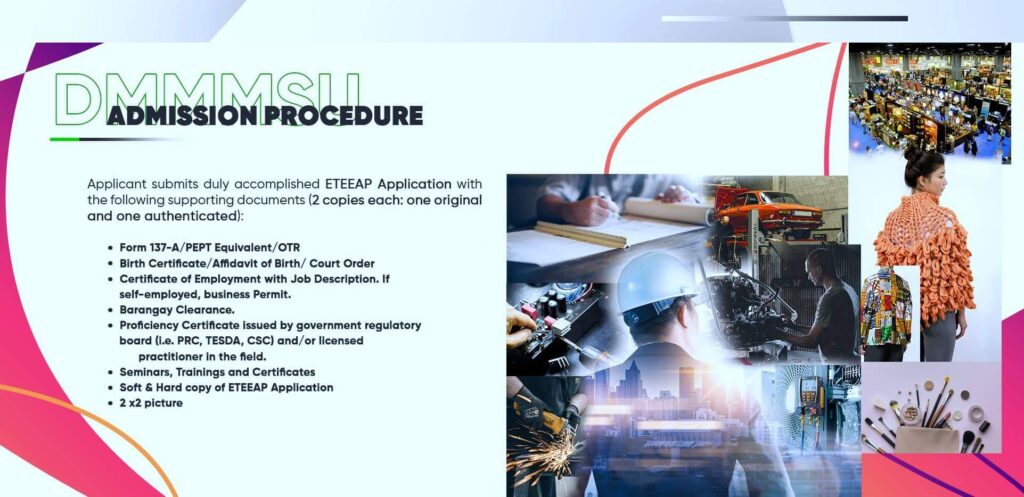
DMMMSU ADMISSION PROCEDURE
A. PRELIMINARY PHASE
1) Applicant secures ETEEAP Application form from the ETEEAP Coordinator of DMMMSU-MLUC College of Technology. Coordinator briefs and orients applicant/s.
2) Applicant submits duly accomplished ETEEAP Application with the following supporting documents (2 copies each; one original and one authenticated):
Form I37-A/PEPT Equivalent/OTR
Birth Certificate/Affidavit of Birth/ Court Order
Certificate of Employment with Job Description. If self-employed, business permit.
Barangay Clearance
Proficieny Certificate issued by government regulatory board (i.e. pRC, TESDA, CaC) and/or Iicenced practitioner in the field.
Seminars, Trainings and Certificates
Soft & digital copy of ETEEAP Application
2×2 picture
Curriculum Vitae (with job description every position)
3) ETEEAP Coordinator, in coordination with the College Dean pre-assesses the documents submitted.
4) If qualified, the applicant undergoes personality assessment (written and oral). If not qualified, applicant is advised accordingly.
B. FORMAL EVALUATION
Panel of Assessors convenes to conduct documentary assessment.
Based on the evaluation of the Panel of Assessors, the Panel convenes to conduct skills and competency assessment. 2.1 Written test or validating oral examination. 2.2 Skills demonstration. 2.3 Worksite visitation.
If the evaluation of the Panel of Experts is satisfactory, the candidate enrolls in the required ETEEAP Courses and instructions will be provided by the assigned professors.
After completion of all requirements on enrolled courses, ETEEAP coordinator submits evaluation results of successful candidates to the Campus ETEEAP Advisory Board for endorsement to the University ETEEAP Advisory Board. Names of successful candidates will be included in the list of graduating students for deliberation in the University Academic Council meeting.
DMMMSU awards the degree to successful candidates.
Here is a list of schools that offer Bachelor of Science in Information Technology (BSIT)
St. Paul University Philippines, Tuguegarao, Cagayan Program: Bachelor of Science in Information Technology (BSIT) Please visit this link.
Lyceum of the Philippines, Batangas Campus (LPU-Batangas) Program: Bachelor of Science in Information Technology (BSIT) Please visit this link.
Note: For the contact details of the above schools where it was not indicated, you may visit this Facebook Group as some of the members are connected with them (Some are current students or alumni/alumnae).
Here is a list of schools that offer Bachelor of Science in Information Technology (BSIT) and Computer Science (BSCS)
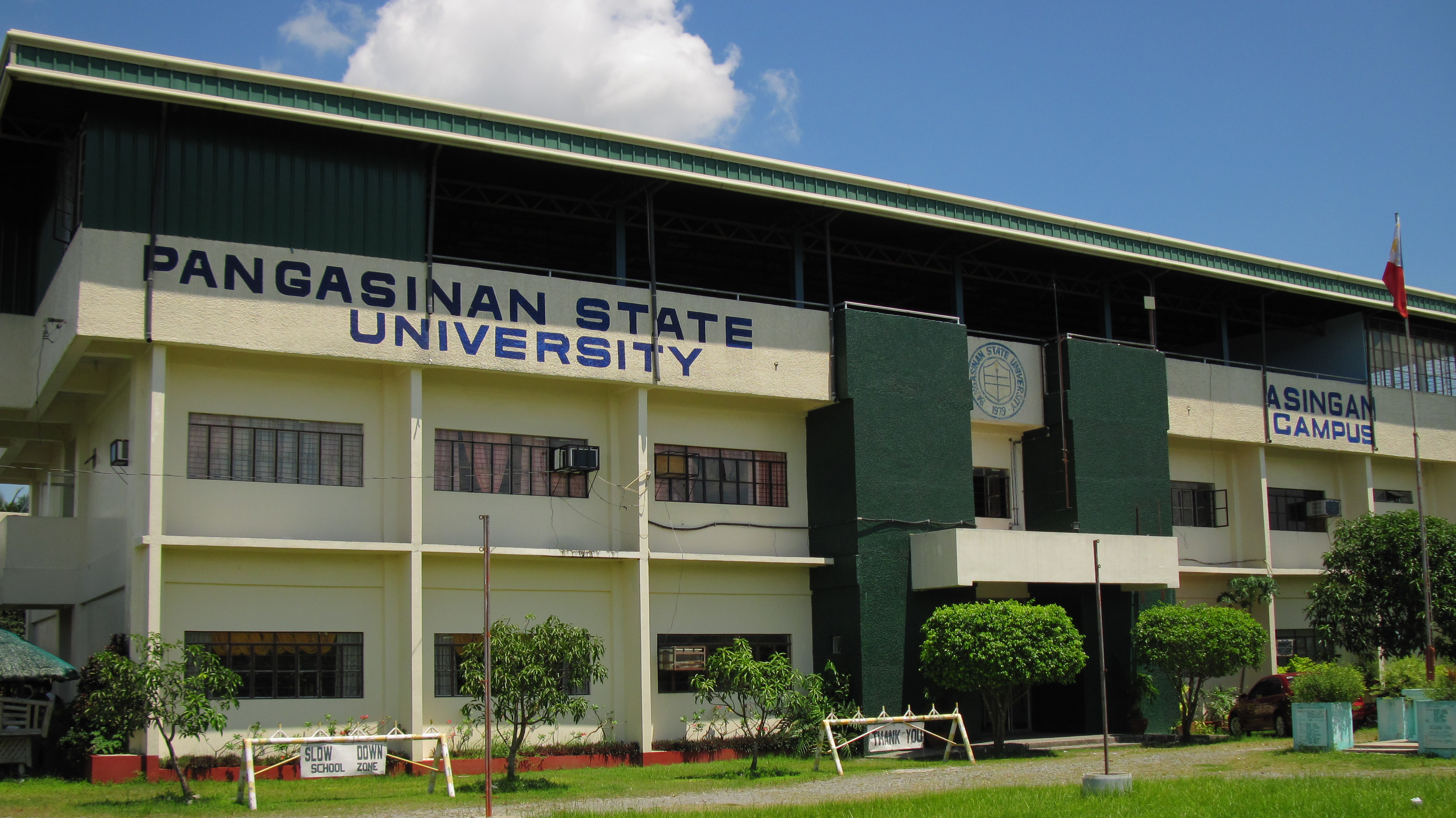
Pangasinan State University (PSU)
One of the largest state university in the country with eight campuses scattered in strategic locations in the province of Pangasinan. Since it is a state university, it is also one of the cheapest (if not the cheapest) of all schools that offer Bachelor of Science in Information Technology (BSIT) in the whole country under the ETEEAP.
Pangasinan is also the home of the ETEEAP founder, former Philippine president Fidel V. Ramos, who was also a decorated military officer and an engineer. He also instituted another law called the anti-monopoly law which paved way for the cheaper Internet and other IT services, particularly related to mobile devices. The province is also a rich source of highly skilled people in many different fields including information technology. It is therefore appropriate that their state university offers this specialized degree.
Program: Bachelor of Science in Information Technology Website:Please go to this link. Facebook Page:PSU Asingan ETEEAP Click on the image below to visit their website.
University of Baguio (UB Baguio)
One of the pioneers among ETEEAP DHEIs during the program’s infancy, and has a track record of unblemished implementation of the program. One of their advertisements years ago said, “We produce leaders” and they lived up to it as a number of its graduates pursued their careers in the military and police force and some retired as generals.
Another pioneer DHEI in the ETEEAP field. UC-BCF also has a track record of producing top-caliber graduates in its different programs, with equally unblemished implementation of ETEEAP. It is also located in the summer city of Baguio and a reputable education institution. Many of its alumni/alumnae had made history in their own fields. You may visit their page to enquire and know more about them.
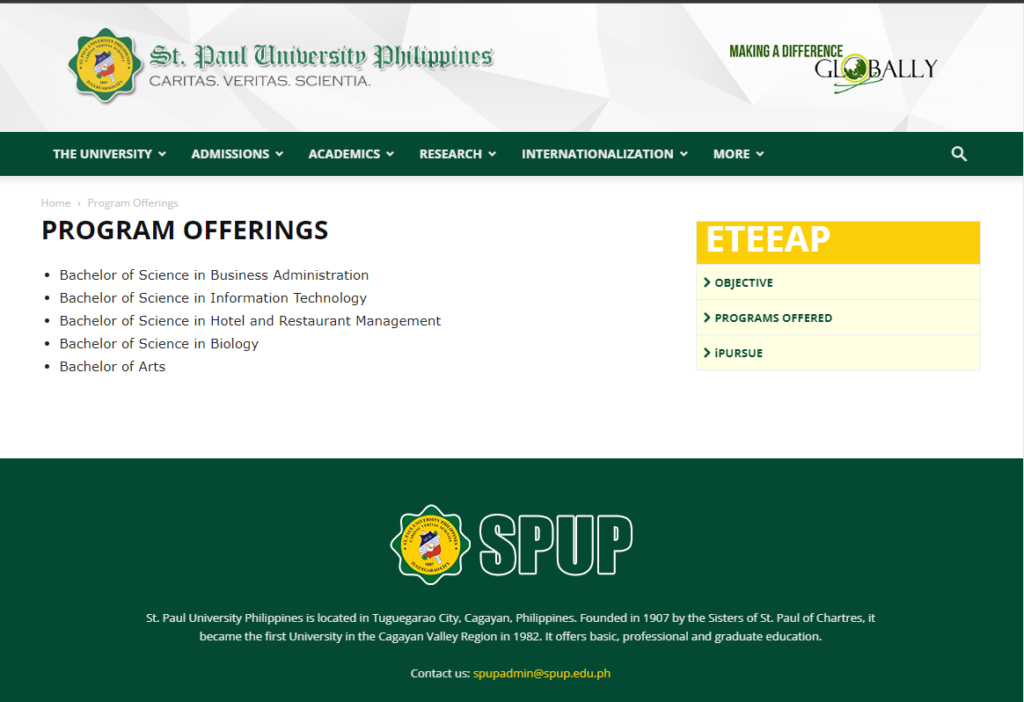
SPUP Tuguegarao is one of the universities in the Philippines with high ranking globally in terms of World University Rankings for Innovation (WURI) 2023, and is among the top 100. You may visit their pages to enquire and know more about them.
Offered Programs:
Bachelor of Science in Business Administration
Bachelor of Science in Information Technology
Bachelor of Science in Hotel and Restaurant Management
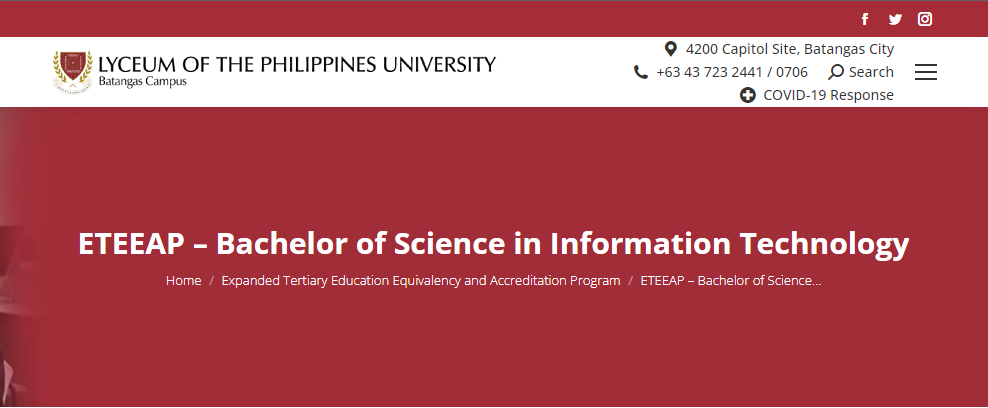
Another pioneer institution in its own way is the Lyceum of the Philippines Batangas (LPU Batangas) located in the province of Batangas. You may visit their page to enquire and know more about them.
Program: Bachelor of Science in Information Technology (BSIT)
Another institution in the province of Batangas is University of Batangas(UBatangas) located two cities of Batangas Province. You may visit their page to enquire and know more about them.
Program: Bachelor of Science in Information Technology (BSIT) They also offer other computer-related and education degrees.
Another pioneer institution in its own way is the Cebu Institute of Technology-University (CITU) located in the beautiful city of Cebu in the Visayas, Central Philippines. You may visit their page to enquire and know more about them.
Program: Bachelor of Science in Information Technology (BSIT)
Note: For the contact details of the above schools where it was not indicated, you may visit this Facebook Group as some of the members are connected with them (Some are current students or alumni/alumnae).